Popular Posts

Showing posts with label wear vintage. Show all posts

New Year's resolution: Wear vintage guide

Since the beginning of the year, I've been writing about getting into wearing vintage stage by stage.

Here is a guide to my guide:

New Year's resolution: Wear vintage, stage 1
   Great first vintage items, a little about condition

Wear vintage, stage 1 continued
   Some more good first vintage choices, and a reader suggestion 

New Year's resolution: Wear vintage, stage 2
   Getting started with vintage fit

New Year's resolution: Wear vintage, stage 2 continued
   Finding a vintage sweater

New Year's resolution: Wear vintage, stage 3
   More about fit

New Year's resolution: Wear vintage, stage 3 continued
   Understanding vintage sizes, ease to allow for a good fit

New Year's resolution: Wear vintage, stage 3 continued
   Waist length, and your particular fit issues

New Year's resolution: Wear vintage, stage 3 continued
   See yourself in vintage glasses

New Year's resolution: Wear vintage, stage 3 continued
   Let vintage hats go to your head

New Year's resolution: Wear vintage, stage 3 continued
   Vintage shoes have sole

New Year's resolution: Wear vintage, stage 4
   What our mothers and grandmothers knew about getting a better fit

New Year's resolution: Wear vintage, stage 4 continued
   Altered reality

New Year's resolution: Wear vintage, stage 4 continued
  Getting started with vintage quality and value

New Year's resolution: Wear vintage, stage 4 continued
   More about quality and value

New Year's resolution: Wear vintage, stage 4 continued
   More on vintage value

New Year's resolution: Wear vintage, stage 5
   How to wear vintage

New Year's resolution: Wear vintage, stage 5 continued
   Some inspiration for wearing vintage your way

New Year's resolution: Wear vintage, stage 5 continued
   What flatters you

New Year's resolution: Wear vintage, stage 5 continued
   Alternatives to authentic vintage

New Year's resolution: Wear vintage, stage 6
   Vintage myth busting

New Year's resolution: Wear vintage, stage 6 continued
   For further research and understanding

New Year's resolution: Wear vintage, stage 6 continued
   Condition continued

New Year's resolution: Wear vintage wrap up
    A few loose ends


I hope this has helped some of you get started wearing vintage, or increased your confidence and knowledge.

Wear vintage!
photo from Brownstoner

New Year's resolution: Wear vintage, stage 6 continued


Condition continued


Because there was some discussion of condition after my vintage myth busting post of last week, I was reminded that one of the Big Issues with vintage clothing has only been lightly touched upon by me. I've written several times that it is probably best for a vintage newcomer to stick with excellent condition, or the rarer mint condition. You may have seen good condition listed, or very good, and wondered what that meant. I mean, isn't good perfectly fine?

Years ago, a group of online vintage sellers worked hard to hammer out a set of words to codify condition ratings. This chart has been edited and tweaked by various groups and sellers, this is one version of it which Maggie of magsrags posted at the Vintage Fashion Guild:


Note (dare I say?) how much the word noted is in this chart...noting the flaws is a big job for a seller, but this is the only way for an online buyer to have a sense of what might be wrong. I do not use this chart in my listings, I don't actually use a chart. My own belief is that what matters is the detail of the condition, in words and pictures. I use the words Mint, Excellent, Very Good, Good and Fair, more or less as shown in this chart, and then I try to innumerate the issues. 

For the beginning vintage buyer online, I stand by the need to consider condition seriously, and to stick with the top levels of condition. A bargain price on an amazing looking item may reflect serious problems. If a seller calls the condition anything less than mint or excellent and doesn't describe the flaws, ask. The seller needs to describe (and ideally also show) what keeps the item out of excellent or mint status.

I know—I have purchased from sellers who didn't adequately describe the flaws that I'm sure they saw, like gaping holes in the lining. The buyer does not need to accept really faulty condition descriptions if she receives an item not as described unless the seller specifically states that the item is as-is and there are no refunds. You have to get in the habit of reading a seller’s terms of sale. If you are looking at an item from a seller whom you trust, you may not need to question what very good means but if someone you don’t know says something is very good without explanation, I would ask for more detail. For good condition, even more so.

As I wrote in my vintage myth busting blog post, I don't really believe in the term “vintage condition.” I don't begrudge the excellent sellers who use the term, and think I understand the reason they do. However, I strongly believe that all issues have to be addressed whether they are due to the age of the garment or any other reason, so why bother adding a vague age-related factor? As an online vintage buyer (particularly thinking of the novice buyer), I believe a seller would need to say what causes an item to be in excellent vintage condition as opposed to excellent condition. Sellers, if you do use that term, I would suggest letting everyone know what you mean by it, ideally on a case-by-case basis.
To be honest, I personally wear plenty of vintage items with flaws. If you love the item and know you look and feel good in it, the flaws tend to be minor for you. It takes a little experience with vintage to know how far you are able to go with condition issues. Start with very small problems and discover your personal tolerance.

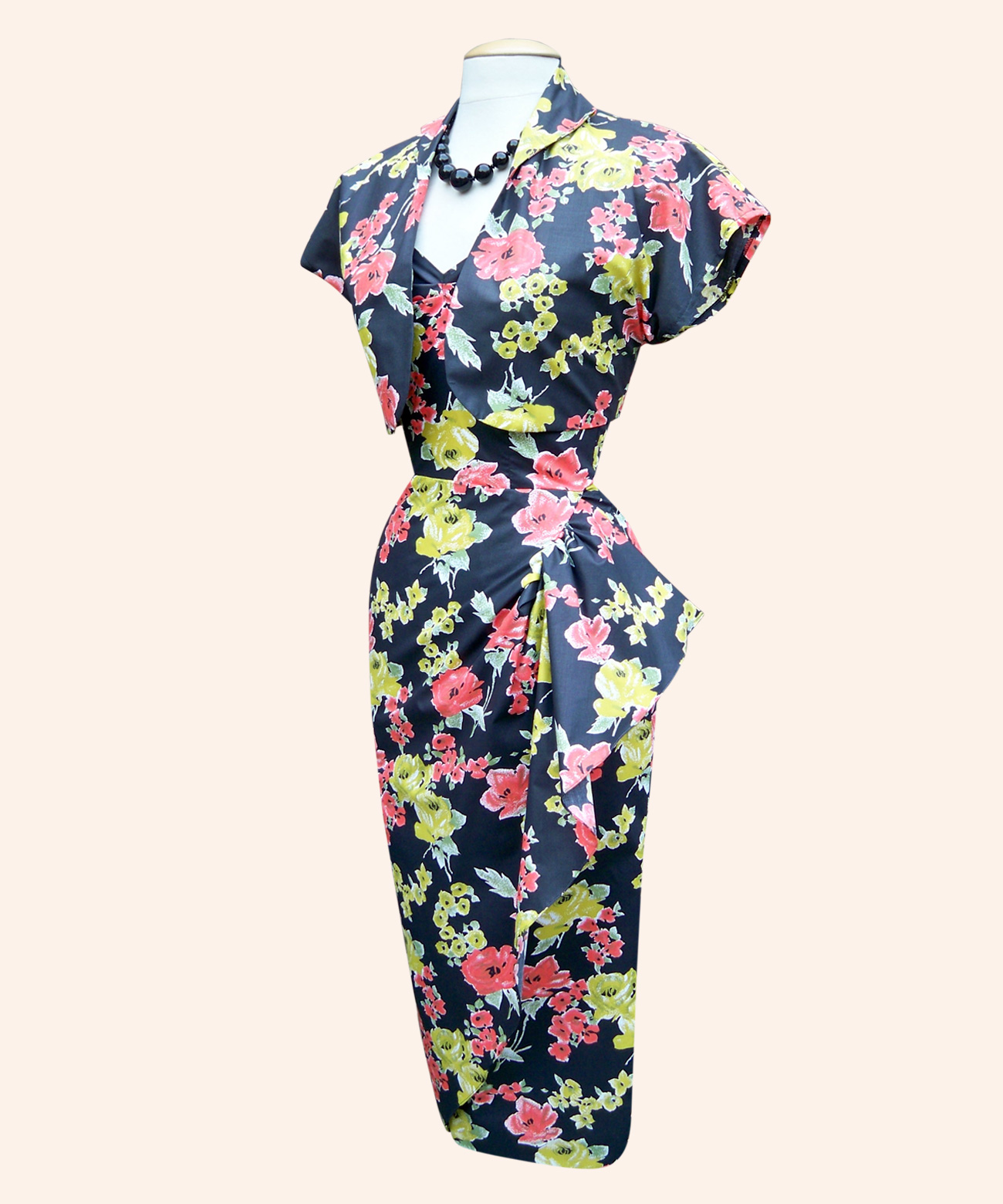
I didn't want to sell this 40s dress due to the number of flaws, but I wear it happily myself because the print disguises the issues pretty well. With experience you can figure out what you can fix and what you can put up with.

Next time: Loose ends round up


New Year's resolution: Wear vintage, stage 6 continued


For further research and understanding

For a couple of years now I have been very grateful to Archivia Vintage Fashion & Textiles for the post Useful Vintage, Antiques and Collectibles Resource Links.  Please explore this wonderfully comprehensive list!

I also want to share this book list created by Leila of Corsets and Crinolines, including her notes on the books. She is particularly interested in, and knowledgeable about, antique clothing and lingerie. She has an amazing collection! My own favorite books are toward the end of this post.

19TH CENTURY AND EDWARDIAN COSTUME

1897 Sears Roebuck Catalog (reprint)

1901 Eaton’s Catalog (reprint)

1908 Sears Roebuck Catalog (reprint)

Madeleine Brant
-The Etiquette of Dress

K.B. Brett
-Women’s Costume in Early Ontario
-Women’s Costume in Ontario, 1867-1907 (Royal Ontario Museum books)

Penelope Byrde
-Jane Austen Fashion

Nancy Villa Bryk
-American Dress Pattern Catalogs, 1873-1909: Four Complete Reprints

Virginia A.S. Careless
-Responding to Fashion, The Clothing of the O’Reilly Family (One of my FAV books about the Vancouver museum acquisition of the O’Reilly family’s clothing along with photos of the family in the clothes, etc.)

Eileen Collard
-Clothing in English Canada Circa 1867-1907

C. Willett Cunnington
-English Women’s Clothing in the Nineteenth Century
-The History of Underclothes
-The Perfect Lady (A rare book showing clothing from the author’s own collection on live models)

Priscilla Harris Dalrymple
-American Victorian Costume in Early Photographs

Alison Gernsheim
-Victorian and Edwardian Fashion: A Photographic Survey

Madeleine Ginsburg
-Victorian Dress in Photographs

Kristina Harris
-The Child in Fashion: 1750-1920
-Victorian & Edwardian Fashions for Women, 1840-1919
-Victorian Fashion in America: 264 Vintage Photographs

Talbot Hughes
-Old English Costumes, A sequence of fashions through the 18th and 19th centuries. (A VERY rare book from the 1910s showing clothing from the V&A when it first opened it costume gallery on real people. Edwardians in antique clothing, how wonderful!!!)

O. Henry Mace
-Collector’s Guide to Early Photographs (How to date antique photos by clothing, etc)

Doris Langley Moore
-The Woman in Fashion (Fabulous book written in 1949, showing clothing dating from 1800 up to 1920 from her own collection shown on her celebrity friends!)

JoAnne Olian
-Victorian and Edwardian Fashions from “La Mode Illustree”

Jacqueline Beaudoin-Ross
-Form and Fashion, Nineteenth Century Montreal Dress (McCord Museum book)

Linda Setnik
-Victorian Costume for Ladies

Catherine Smith and Cynthia Greig
-Women in Pants (Fascinating history of women in the 19th century who wore trousers and why. Loaded with antique photos!)

J.A.E. Wood
How to Make a Dress (1897) (An original rare book on how to make a leg-o-mutton sleeve dress). 

20TH CENTURY VINTAGE FASHION

John Peacock
-The Complete Fashion Sourcebook

Jonathan Walford
-Forties Fashion: From Siren Suits to the New Look
-Ready to Tear: Paper Fashions of the 60s

Christa Weil
-It’s Vintage Darling, How to be a clothes connoisseur

ANTIQUE AND VINTAGE CLOTHING PRICE GUIDES

LaRee Johnson Bruton
-Ladies’ Vintage Accessories

Maryanne Dolan
-Vintage Clothing 1880-1980: Identification and Value Guide

Carol Harris
-Miller’s Collecting Fashion & Accessories

Kristina Harris
-Collector’s Guide to Vintage Fashions: Identification and Values

Diane Snyder-Haug
-Antique & Vintage Clothing: A Guide to Dating & Valuation of Women's Clothing 1850 to 1940

Rosemary Hawthorne
-The Costume Collector’s Companion 1890-1990

Kyle Husfloen
-Antique Trader Vintage Clothing Price Guide

Susan Langley
-Vintage Hats & Bonnets 1770-1970: Identification & Values 

GENERAL HISTORY OF COSTUME AND FASHION OVER THE CENTURIES

Nigel Arch and Joanna Marschner
Splendour At Court (A lovely book showing what was worn at court over the centuries)

Jane Ashelford
-The Art of Dress: Clothes and Society 1500-1914 (National Trust museum book)

Karen Baclawski
-The Guide to Historic Costume (Chock full of photos and reference numbers to clothing and accessories held in UK museums)

Talbot Hughes
-Old English Costumes, A sequence of fashions through the 18th and 19th centuries. (A VERY rare book from the 1910’s showing clothing from the Victoria & Albert museum when it first opened its costume gallery, on real people. Edwardians in antique clothing, how wonderful!!!)

Keith Jopp:
-Corah of Leicester 1815- 1965 (The history of the famous knitwear company in Leicestershire)

Carl Kohler
-A History of Costume

James Laver
-Costume and Fashion: A Concise History

National Geographic, Swimsuits, 100 Years of Pictures.

Mary Brooks Picken
-A Dictionary of Costume and Fashion

Lynn Schnurnberger
-Let There Be Clothes

The Kyoto Costume Institute
-Fashion: A History from the 18th to the 20th Century

Shelley Tobin
-Marriage a la Mode, Three Centuries of Wedding Dress (National Trust book)

L.Rowland-Warne
-Costume (Dorling Kindersley Eyewitness Guides) 

HATS, SHOES AND ACCESSORIES

LaRee Johnson Bruton
-Ladies’ Vintage Accessories

Valerie Cumming
-The Visual History of Costume Accessories

Carol Belanger Grafton
-Shoes, Hats and Fashion Accessories: A Pictorial Archive, 1850-1940

Susan Langley
-Vintage Hats & Bonnets 1770-1970: Identification & Values

Althea MacKenzie
-Hats and Bonnets: From Snowshill, One of the World’s Leading Collections of Costume and Accessories of the 18th and 19th Centuries
-Shoes and Slippers: From Snowshill, One of the World’s Leading Collections of Costume and Accessories of the 18th and 19th Centuries

Alan and Gillian Meredith
-Buckles
-Buttons

Jonathan Walford
-The Seductive Shoe (THE BEST book on shoes!)

CHILDREN’S ANTIQUE & VINTAGE CLOTHING

Elizabeth Ewing
-History of Children’s Costume

Kristina Harris
-The Child in Fashion: 1750-1920

Anna MacPhail
-The Well-Dressed Child: Children’s Clothing, 1820-1940

LINGERIE

Bonnie Holt Ambrose
-The Little Corset Book: A Workbook on Period Underwear

Michael Colmer
-Whalebone to See-Through, A History of Body Packaging

C. Willett Cunnington
-The History of Underclothes

Elizabeth Ewing
-Dress and Undress: a History of Women’s Underwear

Peter Farrer
-Tight Lacing, A Bibliography of articles and letters concerning stays and corsets for men and women. Part 1, 1828- 1880.

Beatrice Fontanel
-Support and Seduction: The History of Corsets and Bras

Rosemary Hawthorne
-Bras: A Private View
-Knickers: An Intimate Apprasial
-Stockings and Suspenders

David Kunzle
-Fashion & Fetishism: Corsets, Tight-Lacing and Other Forms of Body-Sculpture (contains adult material but interesting history!)

Tanya Marcuse
-Armor and Undergarments

Gilles Neret
-1000 Dessous (A wonderful pictorial history of underwear right up to the 1980s but does contain pornographic images due to the nature of underwear and undressing!)

Jill Salen
-Corsets: Historical Patterns & Techniques

R. L. Shep
-Corsets: A Visual History

Valerie Steele
-The Corset: A Cultural History

Shelley Tobin
-Inside Out, A Brief History of Underwear (National Trust book)

Philip Warren
-Foundations of Fashion, The Symington Corsetry Collection 1860-1990 (Leicestershire Museum book)

Norah Waugh
-Corsets and Crinolines

COSTUME CONSTRUCTION

Bonnie Holt Ambrose
-The Little Bodice Book: A Workbook on Period Bodices
-The Little Corset Book: A Workbook on Period Underwear

Janet Arnold
-Patterns of Fashion 1: 1660-1860
-Patterns of Fashion 2: Englishwomen’s Dresses and Their Construction C.1860-1940

Norah Waugh
-Corsets and Crinolines

MUSEUM PUBLICATIONS

Jane Ashelford
-The Art of Dress: Clothes and Society 1500-1914 (National Trust museum book)

K.B. Brett
-Women’s Costume in Early Ontario
-Women’s Costume in Ontario, 1867-1907 (Royal Ontario Museum books)

Virginia A.S. Careless
-Responding to Fashion, The Clothing of the O’Reilly Family (One of my FAV books about the Vancouver museum acquisition of the O’Reilly family’s clothing along with photos of the family in the clothes, etc.)

Jacqueline Beaudoin- Ross
-Form and Fashion, Nineteenth Century Montreal Dress (McCord Museum book)

The Kyoto Costume Institute
-Fashion: A History from the 18th to the 20th Century

The Metropolitan Museum of Art
-Man and The Horse (History of riding wear of the ages)

The Museum of Costume, Assembly rooms, Bath
-Authorised Guide

Shelley Tobin
-Inside Out, A Brief History of Underwear (National Trust book)

Shelley Tobin
-Marriage a la Mode, Three Centuries of Wedding Dress (National Trust book)

Philip Warren
-Foundations of Fashion, The Symington Corsetry Collection 1860-1990 (Leicestershire Museum book)


Some favorite books not listed above


I have literally a hundred books on my wish list, and so I'm sure there are more recommendations to come.

Caroline Rennolds Milbank
-New York Fashion: The Evolution of American Style (My one most necessary book, as inspiration, American designer history, and visual reference)

Georgina Howell
-In Vogue: Sixty Years of International Celebrities and Fashion from British Vogue (This book covers 1918 to 1978, the year it was published. You can see the evolution of style year by year.)

Melody Fortier
-The Little Guide to Vintage Shopping: Insider Tips, Helpful Hints, Hip Shops

Jonathan Walford
-Shoes A-Z: Designers, Brands, Manufacturers and Retailers

Everyday Fashions As Pictured in Sears Catalogs (I have and can recommend the 20s, 30s, 40s, 50s and 60s)

Cally Blackman
-100 Years of Fashion Illustration

These were highly recommended by colleagues of mine (and have just been added to my very long wish list):

Harold Koda Richard Martin
-Flair: Fashion Collected by Tina Chow

Harriet Worsley
-In Vogue: Sixty Years of International Celebrities and Fashion from British Vogue Decades of Fashion (This book was published in 2000, and may be an update to the Howell that I mentioned above)

Nicole Jenkins
-Love Vintage (I know and greatly respect Nicole...I'm dying to read her book!)

If you have a favorite link not on Archivia’s list, or a favorite vintage clothing book...please leave a comment and let us know.


Happy exploring! 


New Year's resolution: Wear vintage, stage 6


Vintage myth busting


My colleagues at the Vintage Fashion Guild helped me compile myths we often hear.


1. All vintage is small.

Absolutely not true. Although there are more vintage items in the XS, small and medium sizes, there is plenty in larger sizes.

Among other searches, search XL vintage dresses on Etsy. Search plus size vintage dresses on Etsy. Always check the measurements and compare them to your own, as I described in my post Understanding vintage sizes, ease to allow for a good fit.

If you are plus size and have questions, you might find an answer (and inspiration) in the honest and positive writing and photos by Va-Voom Vintage.

2. You can find all vintage at a thrift store cheap.

If you can, would you mind sending me the address of said thrift? If you love the thrill of the hunt, feel free to hunt—you may find something you love. In many places, thrift store vintage tends to be ordinary to lower quality 80s and newer. Some may live where there are great finds to be had, but many are not so lucky.

3. Everything that is listed as Mad Men dates from the era portrayed in the show.

Beware of popular keywords used to sell vintage items. I have seen 70s dresses listed as Mad Men, along with “flapper dresses” from the 1980s. Some popular keywords that I've seen used, shall we say, cavalierly: Mod, Hippie, Flapper, Gatsby, Titanic. There are more...many more. If you are looking for a vibe, and don't care when the item comes from, then you may be fine picking out a sequined dress made in India in the 80s and wearing it as a flapper. It may be the best choice among wearable clothes for the purpose. Just be informed so you don't pay authentic flapper prices!

4. The size tag in a vintage item is the current size.

I worked to cover this in Understanding vintage sizes, ease to allow for a good fit. I've seen people put down vintage size 14 items that would fit them perfectly because they are sure they would never wear a 14. Numbers are just numbers, and vintage numbers are particularly disconcerting to the modern mind.

5. A price tag in a vintage item indicates something like the current value.

See my post Getting started with vintage quality and value.

6. Sears items from the 1950s are like Sears items now.

Sears, like many US stores, once stocked clothing made in the US almost exclusively. The quality, style and construction surpassed what you will generally see today. Even though it was considered day-to-day, vintage ordinary quality beats new ordinary quality, hands down.

Black party dress from TiddleywinkVintage, Asian-style cocktail dress from bombshellbettiesvint,  party dress with matching cardigan from onearmedmannequin, oxfords from GingerRootVintage, swimsuit from Jumblelaya...all with Sears labels from the 50s, 60s and 70s. 

7. All used clothing is musty, dirty, etc.

Some is, much isn't. For those just getting started with vintage, it is a better bet to purchase items in excellent condition, and keep a sharp eye (and nose) out for damage. In my experience, most odors can be removed from clothing (some take awhile), except sweat.

8. Vintage clothes look like costumes.

Tell that to Lazy Bones on Chictopia, wearing her vintage blazer, and Islabell in her vintage coat, dress and shoes. Chictopia is one place to find lots of people wearing vintage clothing in their own way. 


9. You can buy a 1920s flapper dress to wear to a roaring 20s party.

This quite stunning authentic 20s beaded silk dress at Shrimpton Couture is (justifiably) $2,400. It weighs 3-4 pounds with the beading, and the silk is sheer. Wearing this gorgeous dress would take the utmost care, and I'd say the Charleston is out.


10. The most valuable vintage items from your closet (your mother's and grandmother's too) are your wedding dress and your fur coat.

I'm very sorry to say it, but the prices paid for these two categories of items set up the assumption that their value must be quite great now. Wedding dresses are such a personal thing, and although there are beautiful exceptions, often a vintage wedding dress is not classic enough, and has stains or other frailties that make a woman not want it for her big day. I love to see wedding dresses passed down in a family. Furs likewise.

11. Wear what your grandmother wore? It has to be frumpy!

Oh yeah?

From Vintage Me

12. You'll find an original Dior New Look or 20s Chanel suit or Westwood punk outfit at your local vintage clothing shop if you ask nicely.

You can bring a box of chocolates, and a million dollars, but the most desirable items will not materialize often.

13. This belonged to my mother’s best friend’s aunt and she had good taste....so it must be valuable.

and 14. I just tossed 3 huge trash bags filled with my mother’s 50s dresses...they’re worthless aren’t they?

The extremes are often wrong: For the most part vintage (New Look Dior aside) is not worth its weight  in gold, but it certainly has value. You can get a feel for its going rate at any given time by searching the internet.

15. If it has a side zipper it is definitely from the 40s. If it has a nylon zipper it is definitely 70s or newer. A crinoline slip in a skirt or dress means it is from the 50s. If it's beaded it's flapper. If it has shoulder pads it is from the 40s. If it has pinked seams it has to be vintage.

There are ways to identify the vintages of items, but there are no blanket statements like these that hold true in every case. Look at the Quick Tips for Dating Vintage on the Vintage Fashion Guild site for some basics, but realize that it isn't a perfect science. For instance, metal zippers were used by home seamstresses long after they went out of use by manufacturers. Reproduction and vintage-inspired clothing can often fool a newcomer to vintage. In my next post I'm going to make more suggestions for further research.

16. Everything vintage belonged to dead people.

OK, this one makes me laugh, but it is a serious issue for some. If you truly feel squeamish at the thought of wearing something someone else wore, keep in mind that the new clothing you try on may also have been worn by someone else, in the dressing room, or before being returned to the store.

Yes, many a person has passed on whose clothing is perfectly fine. You honor them by keeping this facet of their history alive. Older women have told me they are very pleased to have their clothing be worn by younger people around the world.

17. There is such a thing as vintage condition.

This is a term often used to say something like “good considering it is old.” That kind of muddies the waters, as in reality, vintage items can be good as new, excellent, etc., without further qualification.

18. This belonged to my mother's best friend's mother and she swore it was from the 1920s, so it has to be.

It is amazing how many people remember with scientific clarity exactly when and where they purchased and wore certain items. Then there are those who don't.

19. If it does not have a label it must be knockoff or is poorly made.

and 20. All labels are important.

When you get more into vintage, you will find that some of the very best items are without labels. Labels are great to see, and sometimes help you understand the history of the item, but not all are distinguished. On the flip side, some people removed great labels, perhaps as souvenirs. I have had a 1950s Dior suit without label, and only by consulting a number of experts was I able to confirm that the Dior jacquard lining wasn't lying!

21. If it has a label with a name, that name was a designer.

Often there is a designer name or two behind a label, but the label itself may not give you a clue. One case in point, Suzy Perette...there was no Suzy. See the Vintage Fashion Guild's Label Resource for the story behind the labels.

50s Suzy Perette dress offered by badgirlvintage
22. Don't worry about the stains, you can just dye it.

I you are a dyeing expert, maybe. If you are a dyeing expert, you will know that some fabrics (assuming they are washable) take dye much better than others, and some older fabrics simply can't stand up to the conditions of a dye bath. I would not suggest purchasing something while making the assumption that such a project will work out.

23. Every bathing suit was pin-up and every secretary was sexy.

Would that it were so. The clothing certainly helped though!

Next time: Sources for more information


New Year's resolution: Wear vintage, stage 5 continued


Alternatives to authentic vintage

If you want something very specific in vintage clothing, something in a size that is not easily found, or something with a certain je ne c’est quoi that you don't think is available to you in the market, you may find a solution by going with a newly made item.

pattern available at VtgSewingPatterns on Etsy
If you are a skilled seamstress you probably already know you can pick out a vintage pattern (or a newly made vintage reproduction pattern by one of the major pattern companies) and find a vintage fabric or one that has a vintage vibe, and make your own garment. If you are not able to do this yourself, you might wish to find someone who can. Your local seamstress may be up to this task, and may also be able to alter the pattern to fit you just right. There are Etsy seamstresses who create vintage-style items that could create something to your exact specifications.

There are many vintage reproduction and vintage-style clothing sites out there, and I must confess, I have no personal experience with them. I had to ask on Facebook, Twitter and at the Vintage Fashion Guild for other's experiences with makers of new vintage-style clothing. I got so many thoughtful and detailed responses that I will probably devote more time to the subject in the future. For now, I'll be brief.

Some people out-and-out refuse to consider repro vintage. More about this later. Some of the websites that were recommended to me, and that seem to meet certain standards for quality, style and fair labor practices are:


Re-mix Classic Vintage Footwear, where the shoes appear to be faithful reproductions of vintage styles from the 20s through 50s, and are made in Spain. The Gal Friday 40s-style model is currently on sale for $98, down from $206.


Then there's the Esther Williams Swimwear Collection, and from all I can tell, she really is behind this, at the ripe old age of 90. I like this classic sheath suit, available in a range of sizes and colors, and all the swimsuits are made in the US.


Another site that was recommended to me was Vivien of Holloway, and a reply to my inquiry confirmed that all the items on the site are made in Tottenham, North London.

I also really like the look of the workmanship that goes into Whirling Turban items, which are made by skilled seamstresses in Bali.


You may be able to see already that these sites are making very popular vintage styles, providing access to these items for a wide range of people, without having to wait to see the right item come up for sale.

Several other prospects recommended to me: Heyday! Vintage Style Clothing (the clothes are made in the UK and New Zealand) Freddies of Pinewood (jeans made in Turkey, the rest made in the UK) and Time Machine Vintage Reproduction Clothing on Etsy (made in Vermont).

There are reasons for going with repro and vintage-inspired clothing: You might want to replicate an item that has become unwearable, or something you see in a photo. You might want to wear something from the Victorian era through the 1920s but relatively few genuine items are really safe to wear. Some would like to be able to swing dance like mad without having to worry about ruining a great vintage dress. Some would like to try their own hand at making something their mother might have made.

I am intrigued by repro clothing, and I see many cute styles, but I feel torn. I would want to know that the item is made where the workers are not underpaid (and as you can see I've tried to insure that with these recommendations). I can almost certainly guarantee that most repro clothing sites—some of the above shops may prove the exceptions—do not replicate the workmanship that went into the original models, and I mean even the quality of day-to-day clothing from the past. I think Mary Kincaid made this case succinctly on Zuburbia.

I have to say that for every several people who told me about her good experiences with repro clothing, one told me either that she was very disappointed with the quality or fit of an item, or simply would never consider repro. Again, this may be a choice for the individual. I've never considered it, but then I'm not exceptionally tall, in a rush to find a sarong dress from the 50s, or a swing dance champion. I also just don't buy much new clothing.

I have absolutely no misgivings about creating an item out of a vintage pattern, and I may eventually be able to endorse a repro vintage site personally...I do love that pink bathing suit!

Next time: Vintage myth busting

New Year's resolution: Wear vintage, stage 4 continued


More on vintage value


Louise wrote about what she most likes about vintage clothing in a comment on a previous post: “You are not supporting sweatshops. No new materials are being consumed. And most vintage clothing sellers are small businesses—you are supporting an individual rather than a multinational corporation.” For her, the greatest value in vintage clothing is in its impact on the world, economically and environmentally. I have talked with others who are most attentive to the fine construction of the vintage they collect. Some time ago I did a graphic showing off my own favorite aspects:
{click to enlarge}
You may have noticed by now that I haven't said that a 1950s dress should cost X amount. I don't think there will ever be a point at which I would be able to say that a certain vintage piece should cost a certain amount. Dealers set prices that are based on the availability of the items for them, the work they need to put into finding the items and preparing them for sale. They research the going rates. There are dealers that also have a certain right to say that with their knowledge and experience they can offer items of a certain caliber for a certain amount. 

You may be fortunate to find some great items on your own or from beginning sellers, and if so, more power to you. By contrast, I have a friend in a big city nearby that says that she hasn't seen an item older than the 70s for some time, looking in 2nd-hand shops, garage and estate sales. The 40s and 50s that I love so dearly aren't to be found in some areas. If you are interested in 20s and 30s, believe me, the pickings are rare no matter where you are. Rarity does indeed increase value. 

And great vintage sellers, the kind that are knowledgeable, passionate, resourceful, careful, honest and dependable, are a bit rare too. If you find you like and trust certain sellers, you may wish to visit them more than once. As Louise wrote, these are small business owners who will appreciate your support. 

Next time: Thoughts on how to wear vintage

New Year's resolution: Wear vintage, stage 4 continued


More about quality and value

In vintage, quality is often in the details. Better fabrics, lining and better-grade components such as buttons and trims add to the quality of items. Quality can also be in the design, which sometimes means better brand labels, and designer labels. Sometimes no-label or lesser-known labels are designed and made very well, so don't let the labels mean everything to you. Also, some designers sold their names for use in lower quality items, so a designer's name isn't everything either.
Right now there are some healthy prices being paid for lesser-made items from the 70s, 80s and 90s. There is a gradual change from better to lesser quality that has taken place from the late 1960s through today. Many labels (designers, makers) have transcended this in these decades, but the trend has been toward more disposable, briefly fashionable styles. The more you know about clothing details and manufacture, the less likely you will be to pay an exorbitant rate for something that is in actual quality, lower end. You may gain the power to find these relatively common items yourself at thrift stores and garage sales, and you may not need to see the item styled for you to get how it could look. I don't mean to say these items are not worth anything (especially if they make your heart sing) but it is best to arm yourself with the knowledge of their true value. If you still want to pay a top price, you will at least know what you're doing!
Condition is also a part of value. I recommend beginning vintage buyers be aware of the condition component in purchasing vintage. A great item in very flawed condition is of lesser value, possibly lower than a relatively lower quality item in excellent condition. The more you know, the more you will be able to assess this.

Value may also be judged in terms of how long a garment has been around, and how long it may continue to be around. Our parents, grandparents and great-grandparents did not live with disposable items the way we do now, clothing included. Purchases were made carefully, alterations were done, care was taken, mends were made, and quite a bit of wear was expected. If you find a vintage clothing item you love, consider grabbing the baton, wearing the item with the same care and thought that was used 30, 60 and 90 years ago. If you do, you may pass the item on for further use in 30 years!

This 1884 wedding dress has been worn by family members ever since...talk about longevity! (The story is at MailOnline)
Next: More on value

New Year's resolution: Wear vintage, stage 4 continued


Getting started with vintage quality and value

After my post on alterations you may be thinking that you are looking at a huge expense just to have one great vintage dress. You have to pay for the dress, possibly have to pay to have it cleaned and altered. I've been writing a lot about fit. This post is about value and quality, two more of the handful of Really Big Issues to consider when shopping for vintage clothing.

First, know that if you are used to purchasing an item of clothing in the $25-250 range (more or less average modern clothing from budget-conscious to relatively costly), know that the 1940 equivalent would be $402-$4,017 according to the Consumer Price Index inflation calculator, in 1970 that range would be $145.00-$1,449.

1938 catalogue prices (and style!) from the Chronically Vintage blog. That $4.98, adjusted for inflation, would be $79.45 today
If you see prices in vintage catalogues, on vintage price tags, etc. that make you think the items were inexpensive in their day, remember this.

Next, understand that when you buy a vintage piece you pay for something that is usually better than you are paying for today. As a vintage clothing dealer I can vouch for the superior quality of most vintage items—I find it hard to buy modern items in large part because of their lack of quality.

In the 1950s, most of what was available to wear in the US was made in the US, from the raw materials, to the textile, to the design and finally to the finished product. Union tags will let you know that fairly-paid garment workers made the item.

The ILGWU, once one of largest labor unions in the United States, was one of the first U.S. unions to have primarily female membership (from Rex Parker Does the NY Times Crossword Puzzle
By comparison: Green America's Retailer Scorecard gives Wal-Mart an F, J.C. Penney a D-, and Target a D+ for their use of sweatshops and forced child labor. In choosing a vintage article you not only recycle it for current use, but you can be fairly confident that it was made with better values in its day.

Elizabeth Cline's The History of a Cheap Dress should give even the most inveterate H&M shopper pause. I lament, as does Cline in fascinating detail, the trading of quality for quantity.

{to be continued}

New Year's resolution: Wear vintage, stage 4 continued


Altered reality


Most people now purchase new clothing without an exacting fit—the one exceptional time might be around a wedding, when there is a scramble to find an alterations expert. In our parents’ and grandparents’ times, alterations were done routinely, almost nothing was a perfect fit right off the rack. One might have the skills herself, or have a relative or friend to do the work, otherwise it was off to the seamstress or tailor, with whom one might develop a strong bond. She would know what worked best for her individual clients and make astute suggestions.

Since vintage clothing is often more fitted than modern clothing, the alterations expert is still absolutely an invaluable resource...and more than just for weddings!

My colleagues at the Vintage Fashion Guild unanimously agreed that altering vintage clothing for personal wear is fine, so long as it doesn't change the integrity of the original design permanently. Keep in mind, probably 20%+ of vintage clothing has been altered, most likely to fit the original owner.


A few caveats: 1. If possible, leave all the extra fabric inseams and hem in an alteration so that the piece can be altered back again. 2. The fewer changes you need made, the less expensive will be the alteration, so if economy is important to you, choose something that just needs one or maybe two changes. 3. A terribly rare or extremely valuable item is probably best to preserve as it is. 4. It is easier (and usually less expensive) to make something a bit smaller than a bit larger.

Another thing that the alterations person can do is mend and fix if needed. A new zipper, a torn buttonhole, a hem restored...if these are not skills you possess, you need to find a seamstress.

How do you find a skilled seamstress? What should she cost?

These are hard questions to answer in any concrete way, because your town may differ from Paris or New York or Charlotte or Fargo. If you have any vintage clothing shops in your area you might try asking if they have any recommendations (some even have alterations people who come in regularly). If you know anyone who wears vintage, ask if she has a recommendation. If you have a trusted dry cleaner, inquire there. Look on your local craigslist, in your phone book, online. Ask on Facebook or Twitter. When you have someone in mind, take a test item, one that you wouldn't cry if you lost. If it comes out great, and you liked the seamstress, feel safe taking more items. I especially appreciate a seamstress who loves and respects vintage clothing. So often they do, because they are interested in the fine points of clothing construction.

Next: Value and quality

New Year's resolution: Wear vintage, stage 4


What our mothers and grandmothers knew about getting a better fit

We are now on to more advanced aspects of fit. Fitted women’s clothing of the past has distinct shaping that sometimes seems unlike the human form. If you've ever encountered an impossibly small waist on a dress, or impossibly high darts, you might have wondered what sort of person could wear these?

Your mother and grandmother might have worn these, with the help of the arsenal of foundation garments that aided the in-vogue silhouette of the era.

1935 lingerie advertisement—You can see how this shaping could help achieve the long lean look of the 30s (Courtesy of Vintage Venus)
Jody of Couture Allure Vintage Blog did a wonderful job of exemplifying the fit of items from 1950, and the underpinnings that were integral to the look at the time, in her blog post Foundation Garments to Make Your Vintage Dresses Fit Correctly. Vintage foundations are really different from most of the shapewear that we see today; the control and shaping is much more powerful, particularly in the decades around the mid 20th century, and of course the Victorian and Edwardian eras. If you are able to find elasticized vintage foundations that are unused, they are more likely to still have their flexibility and stretch, particularly if they are 1950s and newer. Jody followed up on her blog with a post listing modern makers of vintage-style foundations. This post, and the comments after, offer quite a bit of helpful guidance.
On a personal note: I do not wear vintage undergarments (other than slips) except on special occasions and for special-fit items. I favor clothing that doesn't demand an extreme fit, I prefer the freedom without this fit. One of the reasons I'm fond of early to mid-40s clothing is that it is a more natural silhouette, one that tends to fit me. Others swear by vintage foundation wear for how it makes their clothes fit, how it makes their clothes look, and for how it makes them feel. I think this is a personal decision. I don't consider it wrong to skip the vintage under layer, but it is important to understand how it impacted fit and how you might be able to wear something you love with just a bit of undercover help.
Obviously glamour is one of vintage lingerie's greatest charms, as this fun little video demonstrates:


For more on fashionable silhouettes and how they were achieved, see the Met Museum article Twentieth-Century Silhouette and Support

Next: Alterations to achieve a better fit

New Year's resolution: Wear vintage, stage 3 continued


Waist length, and your particular fit issues

Even though my last post covered tips for allowing ease in vintage clothing without stretch, there are still more points to be made. If you've ever tried on a vintage dress that ought to fit your waist judging by the stated measurements, but it was too tight, you have probably experienced a length problem. Remember how I wrote that back waist length would be important? For a fitted (not intentionally bloused or full) bodice, having your back waist length coincide well with the dress is vital.

This 80s shirt dress from Big Yellow Taxi Vintage features blousing that could add to the back waist length.
I recently saw a vintage size chart that declared 5'6" tall, and since so many of us are now taller, lengths can be a factor.

Melody of Tangerine Boutique suggests that you take into account whatever fit issues you have with modern clothing, and pay close attention to the corresponding measurement in vintage clothing. I have slightly broad shoulders and, from years of playing the horn, I have a relatively wide rib cage. You can be sure I ask for the under-bust measurement of any really fitted dress!

60s cheongsam or qi pao, a style of dress with fit galore. Notice that Viva Vintage Clothing rightfully gives lots and lots of measurements!

Next: Alterations, foundations and other ways to achieve a more
ideal fit

New Year's resolution: Wear vintage, stage 3 continued


Understanding vintage sizes, ease to allow for a good fit

A further word about vintage sizes. Sometimes you see an item with a size and believe this must have something to do with your current size. Vintage sizes do not coincide with modern sizes. Nor are they predictable as compared with other items from the same era. In her study of advertisements in Vogue magazine from 1922-99, Alaina Zulli found a great deal of irregularity, with a generally decreasing size number through the decades, due to so-called vanity sizing.

As summarized in the New York Times (“One Size Fits Nobody: Seeking a Steady 4 or a 10”):
A woman with a 32-inch bust would have worn a Size 14 in Sears’s 1937 catalog. By 1967, she would have worn an 8, Ms. Zulli found. Today, she would wear a zero.
Again, fit is all about measurements, not stated sizes.

Now that you have some knowledge of your measurements and sizing, are you eager to find that perfect Mad Men dress, something fitted from the 50s to early 60s? I'm eager to help you!

50s sheath dress from Personal Pursuits
A 1950s to early 60s dress is almost always designed to highlight an hourglass shape, with a relatively fitted waist, and a waist seam that doesn't usually have any stretch. With all vintage clothing you need to focus on the measurement that is the most fitted, and in this era, that measurement would most likely be the waist.

You now know your waist measure, and what you need to be able to enjoy yourself in your vintage dress is a little extra space.

I asked my colleagues at the Vintage Fashion Guild what they would recommend in the way of extra space. Nicole of Circa Vintage Clothing recommended allowing 1"-2" extra at the waist, smaller on the smaller end of sizes, larger on the larger end. Anne of Vintage Baubles recommends that since one moves more through the hips—walking, sitting, bending, etc.—you would want more room there. She sent me to this fantastic ease chart.

Amber of The Vintage Vortex made a great point: “I think if I were wearing a much older item than 1950s I would want more ease for myself as thread and fabric deterioration would be a factor...I think that the age of the garment should also play a part in determining ease.” Jody of Couture Allure Vintage Fashion added that fabrics are a factor in ease; taffetas, satins, and loosely woven fabrics are challenging because if a dress is too tight, the seams will get stressed and there will be pulling along vertical seams. I plan to discuss fabric and how it matters in your choices in more detail later.

Remember the style of the item makes a difference in fit. What if the dress is fitted and strapless? Hollis of Past Perfect Vintage cautions that if such a dress is not tight, it won't stay up! I believe that we can tolerate a closer fit for a more formal (and briefer!) engagement.

50s formal from Vintage Devotion
Although I've been talking about purchasing a classic fitted sheath dress, every era has a variety of styles and fits, and the ease will vary with the cut of the garment, and, as my colleagues pointed out, its age and fabric. 


Looking online you may notice that you end up spotting the waist measure you want, and the bust and hip measures look too big. Still, no matter what era of clothing you fancy, you have to start with the measurement that is tightest, and then...go to the next stage!

Next: Waist length, and your particular fit issues

New Year's resolution: Wear vintage, stage 3


More about fit

There is no standard that vintage sellers collectively use to describe sizes, but let's be fair, there is no precise standard for modern clothing either!

I have tried to at least codify my own size estimates, as you can see by looking at a previous blog post Women's vintage clothing: determining size. Other sellers have done the same. However, even in my listings I would recommend that if you see size 6 or XL, do not assume it is the same as your idea of size 6 or XL. Go straight for the measurements and compare those to your own.

Many sellers, including me, suggest that you compare the measurements of an item you're interested in with something similar of your own that fits you well. This is great if you indeed have something similar in key ways, for instance non-stretchy if the item you want is woven not knit, and fitted in the same ways. I will later make suggestions about how to choose items even if you have nothing similar.
When should you ask for further help from a seller? By all means ask if there are no/not enough measurements or the condition is either not listed or described. If a seller offers almost nothing they may either be beginners or just not very skillful sellers.
 One characteristic of a good seller is that they offer most or all of the information you need to make an informed decision in the listing. Most good sellers will be happy to guide you if you need further help with the size or some other aspect. Just remember, don't ask if that 1950s dress is a size 6...ask about the item's measurements.
Now that you've taken a look at knits, you are ready to delve into woven items, items without much or any stretch. Here fit is so important.

A great beginner's vintage item is a flaring coat or jacket. These are chic, stylish items dating most often from the 40s-60s, and working for a range of sizes, even sometimes maternity. The most fitted dimension may often be the shoulder width. Think of them as just one step more fitted than a cape, which you can see also makes a great vintage choice.
50s pink satin swing coat at violetvillevintage, 60s tartan cape coat at gogovintage, 60s navy cape coat at alexsandras, 40s-50s red swing jacket at badgirlvintage, 50s black swing coat in my own shop

Next time: Still more about fit!

New Year's resolution: Wear vintage, stage 2 continued


Finding a vintage sweater

Now that you have your measurements, you are ready to choose vintage clothing that works well for you, and you are practically guaranteed success with a vintage sweater.

There are many styles of sweaters, from chunky knits to fitted Sweater Girl styles, cardigans, short sleeves and sleeveless, beaded, embroidered, hand knit and major vintage designer labels.

Hand knit from PenelopeMeatloaf, beaded knit tank from sabrosavintage, beaded cardigan from ticklepink, pink cashmere cardigan from LunaParkVintage. Photo on right from belle de couture on teenvogue.com.

What do you like in a modern sweater, something you could wear skiing, a simple basic or something a bit flashy? If you're looking for something warm and thick, try searching for vintage sweaters using keywords like Nordic, Irish, ski, Icelandic and cable knit. Sweater Girl sweaters are fitted, usually 1950s to 60s in vintage, and often waist length. Look for soft lambswool blends and cashmere, beads and sequins for something even dressier.

When it comes to basics, I love vintage cashmere sweaters. They beat most modern cashmere knits in the quality to price ratio by quite a lot. Cashmere is light, soft and warm, not likely to irritate the skin of any but a tiny fraction of the most sensitive wearers. It comes in a wide range of styles and colors, and it is a practical luxury.

This 70s vintage Scottish-made cashmere sweater from bigyellowtaxivintage is almost guaranteed to lower your heating bill!


Knits have various appropriate fits. If you like a Sweater Girl fitted fit, look for a sweater with a bust measure about the same as your own. Very often the hem of a sweater is ribbed, and the ribbing stretches more than would a plain stitch, as well as being sturdier. What that means is that you don't need to be afraid if a ribbed hem measures smaller than that place (waist or hip) on you.

If what you are after is a thick, chunky knit, you may want it to be larger than you at the bust. I would allow 1"-2" of ease.

Look carefully at the condition of vintage sweaters. Holes can be mended, but when just starting out with vintage, look for a sweater in excellent shape, clean and either hole-free or with just one or two tiny mended holes in inconspicuous places.

I often mention in my listings that I wash vintage sweaters in Eucalan. This is an eco-friendly wash for hand washable items, and I find it particularly great for sweaters. You do not need to rinse it out, and it contains lanolin, which is often stripped from natural fiber sweaters in washing. I believe in this product so much that I am including a sample with any washable sweater purchased from me.

Next time: More about fit, and another great vintage starter item